Mammogram
Overview
Overview
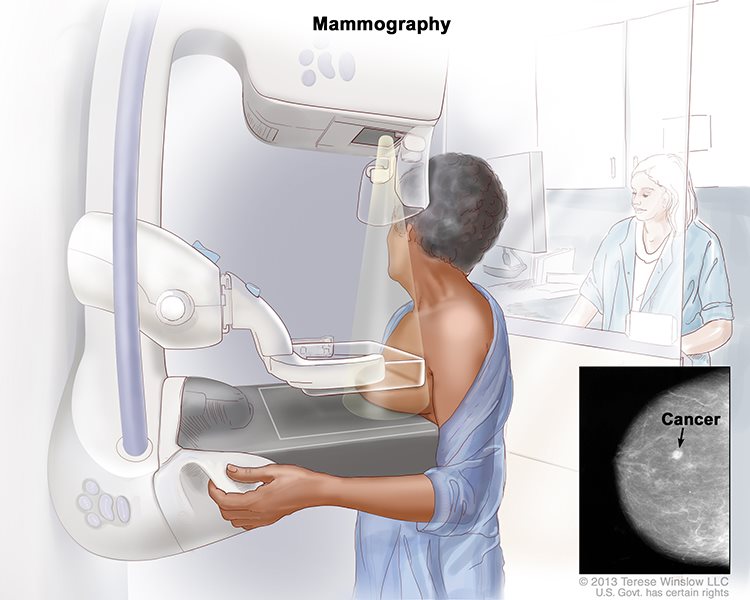
A mammogram is an X-ray image of breast tissue. Mammograms can identify a breast lump or abnormality before it can be felt. Microcalcifications, a cluster of small calcium specs, can be cancer, precancerous cells, or other benign conditions. If these or other abnormalities are present, additional tests are needed to determine the nature of the cells.
Types of mammograms
There are two primary types of mammograms, screening and diagnostic. See below for more information.
Screening mammograms can check for breast cancer in women who have no signs or symptoms of the disease. Women should have screening mammograms regularly so that breast cancer can be detected early, when treatment is most effective.
Diagnostic mammograms are used to learn more about unusual breast changes. Diagnostic mammograms may focus on an area of the breast that is suspicious. They may involve special techniques and more views than screening mammograms.
3-D mammography
A 3-D mammography takes many low-dose X-rays to create a three-dimensional picture of the breast. Also called digital tomosynthesis, the procedure helps doctors locate and better examine abnormalities. It is especially helpful for women with dense breast tissues. 3-D mammography can provide a more accurate picture of the breast, reducing the number of false positive scans compared to 2-D mammograms.
What to Expect
What to Expect with a Mammogram
Before your mammogram, you’ll undress above the waist and wear a wrap. The technologist will position your breasts flat on the plate of the machine to get a high-quality picture. The plastic upper plate is then lowered to compress your breast while the image is taken.
Individual compressions only last a few seconds but can cause discomfort. Be sure to tell the technician if you’re experiencing pain.
Screening mammograms usually involve two or more X-ray pictures of each breast. Diagnostic mammograms are performed with the same X-ray equipment but with a higher total dose of radiation as more images are needed to obtain views of the breasts from several angles.
Find Care
Why Choose Texas Breast Specialists
Our team of breast care professionals is dedicated to your health and well-being. When you come to us for care, you’ll find:

Leading expertise
Our specialists trained at leading institutions across the country. They bring their extensive knowledge and skills of treating each case.

Trusted expertise
Our specialists trained at leading institutions across the country. They bring their extensive knowledge and experience to each patient.
Loading component...
Loading component...
Loading component...
Overview
Overview
A mammogram is an X-ray image of breast tissue. Mammograms can identify a breast lump or abnormality before it can be felt. Microcalcifications, a cluster of small calcium specs, can be cancer, precancerous cells, or other benign conditions. If these or other abnormalities are present, additional tests are needed to determine the nature of the cells.
Types of mammograms
There are two primary types of mammograms, screening and diagnostic. See below for more information.