Colonoscopy
Colonoscopies are a safe and effective way to examine the full lining of the colon and rectum, diagnose colorectal problems and ensure your health.


Many people delay a lifesaving colonoscopy because they don’t know what to expect. Our team walks you through each step to help you have the best possible experience.
Preparing for your colonoscopy is an essential part of the process because it allows our doctors to clearly see the large intestine. We answer your questions and walk you through each step to minimize any stress or concern about prep.
In general, your prep involves:
Low-residue diet
A few days before your colonoscopy, you will eat only low-residue foods like white bread and pasta, chicken, fish, and fruits and vegetables without skins. We provide you with a complete list of foods to take the guesswork out of this step.
Clear liquid diet
You switch to a clear liquid diet the day before your procedure. This step ensures that nothing remains in your colon for your screening. Water, clear juices without pulp, and broth are a few examples.
Prep solution
Our team prescribes a special solution you drink, which triggers your bowel to empty. After you drink this solution, you’ll likely feel most comfortable if you can stay at home near a restroom.
Our team will ask you to stop all food and clear liquids several hours before your procedure. Because you will receive sedation, a family member or friend must drive you to and from your procedure.
When you arrive, we guide you back to a prep area, where you change into a gown and lie on a hospital bed. Our anesthesiologists provide sedation or anesthesia to help you feel relaxed and comfortable. Once you are ready, we take you into the endoscopy suite. The procedure usually takes 1 hour or less, but it may take longer if you have many polyps.
After your procedure, we take you to a recovery area to gradually wake up. You will feel drowsy for most of the day and should not drive.
Some patients experience bloating or minor discomfort in the hours after their procedure, but this is usually minor. Our team will let you know when to resume normal activities, but most people can return to work or school the next day.

Trusted expertise
Our specialists trained at leading institutions across the country. They bring their extensive knowledge and experience to each patient.

Personalized attention
With our care team, you receive an individualized evaluation and care plan. We are with you and your loved ones at every step, from diagnosis to treatment and beyond.

Experts close to home
We make it as easy as possible to access the care you need. With locations across the state, you are likely to find a provider near where you live and work.
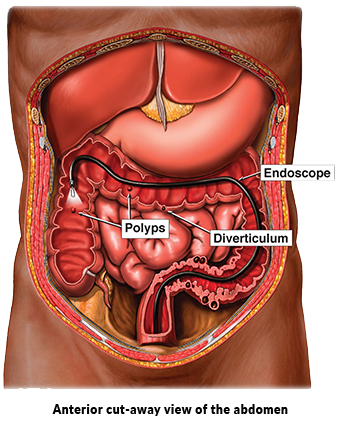
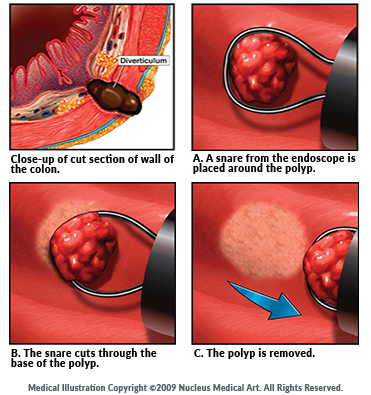
A colonoscopy is a test that can identify or rule out colon cancer and other conditions in the colon (large intestine). Our specialists can also remove abnormal growths at the same time, so you won’t need a repeat procedure.
Colon cancer is a leading cause of cancer-related death, but colonoscopies can save lives. This procedure is the best way to detect and remove colon cancer early, before the cancer spreads to other areas.
A colonoscopy is best known as a colon cancer screening, but it’s not just a test — it’s a cancer prevention tool. During this procedure, we can remove colon polyps (growths), which affect up to 40% of U.S. adults. Without removal, polyps can turn into colon cancer.
A colonoscopy can also identify gastrointestinal conditions. Our specialists may diagnose inflammatory bowel disease (IBD) or diverticulitis during a colonoscopy.
Getting regular colonoscopies is an essential part of your cancer screening regimen. Talk with your healthcare provider about how often you need testing. If you have a higher risk of colon cancer, your physician may recommend more frequent screening.
Benefits include:
Texas Colon & Rectal Specialists prefer high-resolution colonoscopies over virtual colonoscopies due to its ability to detect smaller polyps and other changes in the lining of the colon and allow for the removal of abnormal cells during the procedure.
While virtual colonoscopies require the same prep before the procedure, the patient is not sedated. During the virtual colonoscopy, a tube is inserted into the rectum to produce 2D and 3D images of the colon. If abnormal cells are detected during the virtual colonoscopy, the patient must still undergo a second high-resolution colonoscopy procedure for removal.
Colonoscopies are safe, especially when your team is highly experienced and skilled. Experts agree that the benefits of colonoscopy, especially early cancer detection, outweigh any risks. In rare cases, complications may happen, which include:
Many people delay a lifesaving colonoscopy because they don’t know what to expect. Our team walks you through each step to help you have the best possible experience.
Preparing for your colonoscopy is an essential part of the process because it allows our doctors to clearly see the large intestine. We answer your questions and walk you through each step to minimize any stress or concern about prep.
In general, your prep involves:
Low-residue diet
A few days before your colonoscopy, you will eat only low-residue foods like white bread and pasta, chicken, fish, and fruits and vegetables without skins. We provide you with a complete list of foods to take the guesswork out of this step.
Clear liquid diet
You switch to a clear liquid diet the day before your procedure. This step ensures that nothing remains in your colon for your screening. Water, clear juices without pulp, and broth are a few examples.
Prep solution
Our team prescribes a special solution you drink, which triggers your bowel to empty. After you drink this solution, you’ll likely feel most comfortable if you can stay at home near a restroom.
Our team will ask you to stop all food and clear liquids several hours before your procedure. Because you will receive sedation, a family member or friend must drive you to and from your procedure.
When you arrive, we guide you back to a prep area, where you change into a gown and lie on a hospital bed. Our anesthesiologists provide sedation or anesthesia to help you feel relaxed and comfortable. Once you are ready, we take you into the endoscopy suite. The procedure usually takes 1 hour or less, but it may take longer if you have many polyps.
After your procedure, we take you to a recovery area to gradually wake up. You will feel drowsy for most of the day and should not drive.
Some patients experience bloating or minor discomfort in the hours after their procedure, but this is usually minor. Our team will let you know when to resume normal activities, but most people can return to work or school the next day.
Trusted expertise
Our specialists trained at leading institutions across the country. They bring their extensive knowledge and experience to each patient.
Personalized attention
With our care team, you receive an individualized evaluation and care plan. We are with you and your loved ones at every step, from diagnosis to treatment and beyond.
Experts close to home
We make it as easy as possible to access the care you need. With locations across the state, you are likely to find a provider near where you live and work.